The capital city of the United States, Washington D.C., may not be as vast as Tokyo in Japan, but it boasts an efficient subway system that provides easy access to major attractions.
Contrary to the negative perception often associated with subways abroad, Washington D.C.’s metro system is notably safe and well-maintained, with clean trains and stations.
Let’s take a look at how you can tour Washington D.C. using the metro.
Metro Stations with Nuclear Shelter Features
Many of the subway stations in Washington D.C. were built during the Cold War era and were designed to serve as nuclear shelters. In case of emergencies, these stations are equipped to provide refuge and safety. As a result, reaching the platforms from the ground involves descending long staircases or escalators. It’s advisable to travel lightly when using the metro for ease of movement.
Japanese-made Trains in Washington D.C.’s Metro

Washington D.C.’s metro system includes trains manufactured by Japanese company Hitachi. While the lighting inside the trains might be slightly dimmer compared to Japanese trains, the vehicles have been gradually updated. The interior lighting has been changed from cream-colored to daylight color, offering a more familiar brightness to Japanese travelers. This well-lit environment provides a sense of comfort for many Japanese tourists.
Major Metro Stations and Nearby Tourist Attractions
Now, let’s introduce the main metro stations and their nearby tourist spots:
Union Station

Union Station is the largest terminal in the city, serving Amtrak trains and offering access via the Red Line. From here, you can head south to Capitol Hill, where you’ll find the United States Capitol, Library of Congress, and the Supreme Court. Additionally, walking along Pennsylvania Avenue from Union Station is a convenient way to reach the White House.

In the Northeast of Washington D.C., where history and modernity mer...
Metro Center Station

Metro Center is the largest subway terminal in the city, serving the Red, Blue, Orange, and Silver Lines. Located in the heart of downtown, this station is surrounded by various shops, including the iconic Macy’s department store. Two blocks east of the station, you’ll find the Ford’s Theatre.
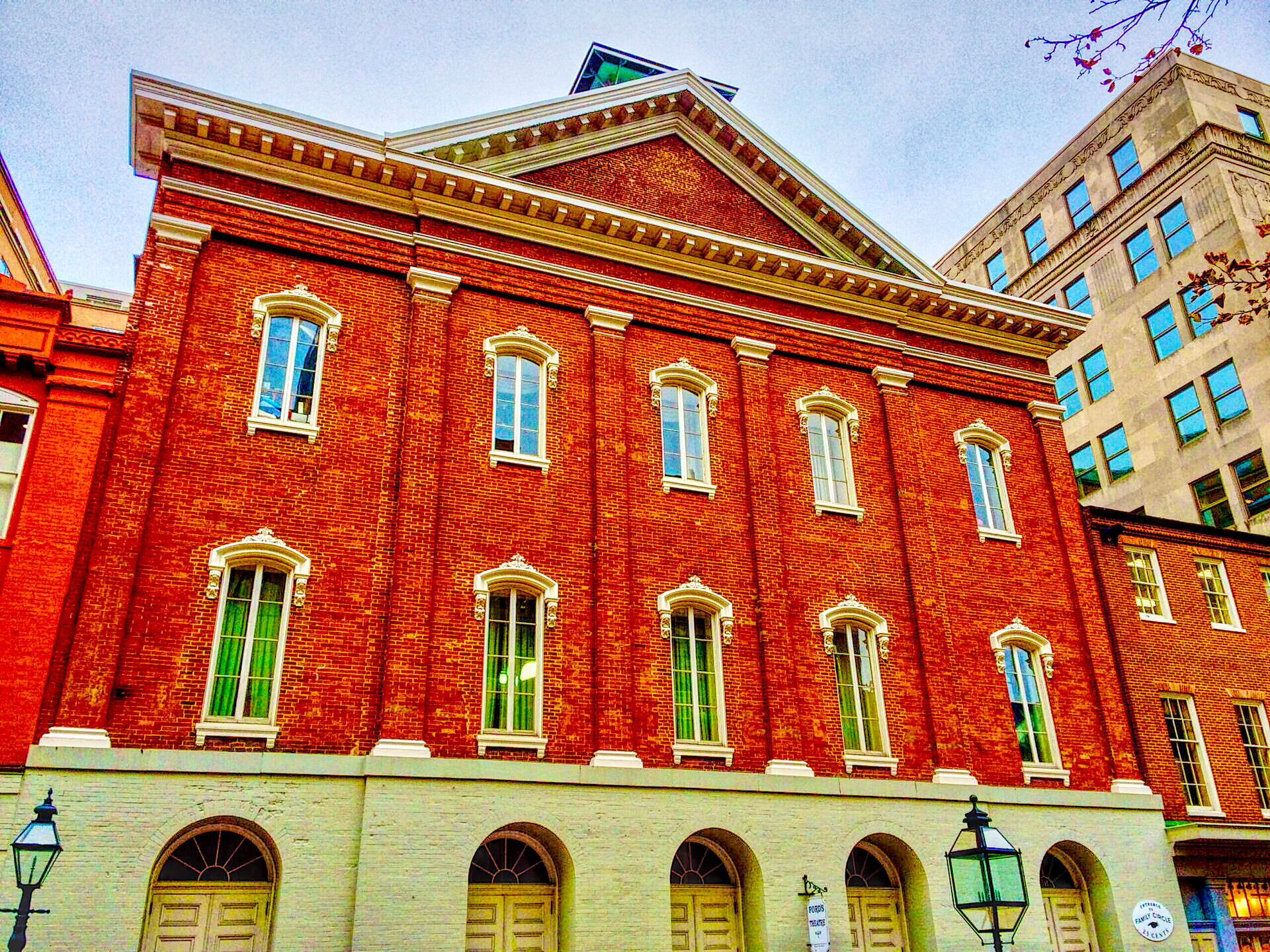
In 1865, President Lincoln was assassinated while attending a play at ...
Smithsonian Station
The Smithsonian Station, accessible via the Blue, Orange, and Silver Lines, is slightly distant from the actual Smithsonian Institution’s headquarters. However, it is close to the United States Holocaust Memorial Museum. By walking west along Independence Avenue from this station, you can reach the Washington Monument and continue northwest to the Lincoln Memorial.
L’Enfant Plaza Station
L’Enfant Plaza Station is one stop away from Smithsonian Station, and its nearest tourist attractions are the National Air and Space Museum and the National Museum of the American Indian. The National Air and Space Museum is a well-known tourist spot, visitors and often included in many tours. However, if you are traveling independently and using the subway, it is recommended to visit the museum at your own pace and explore freely.

The Smithsonian National Air and Space Museum in Washington D.C. is ...

In Washington D.C.'s National Mall, there is a museum called the "Nati...
McPherson Square Station and Farragut West Station

These two stations provide access to the north side of the White House. McPherson Square is northeast of the White House, while Farragut West is northwest. Depending on your preference, you can use either station.

The White House is one of the most famous buildings in the world, attracting millions of tourists every year. However,...
Foggy Bottom Station
Foggy Bottom is known as a student district due to the presence of universities and research institutions. It offers numerous reasonably priced accommodation options, making it a popular base for tourists. If you walk west on K Street from the station, you’ll reach Georgetown, a trendy neighborhood with vibrant nightlife.
Dupont Circle Station

Accessible via the Red Line, Dupont Circle and its surroundings offer fashionable shops and 24-hour pharmacies, making it an ideal spot for enjoying the nightlife. To the northwest along Massachusetts Avenue, you’ll find Embassy Row, lined with numerous embassies.

Washington D.C. is a wonderful tourist destination with rich history a...
Adams Morgan Station
Located one stop north of Dupont Circle, Adams Morgan Station is east of the National Zoo. The zoo is a part of the Smithsonian Institution, and the best part is that it’s free to enter. The station is also close to Washington National Cathedral, an impressive neo-Gothic architectural landmark.

Located about 2 miles north of Georgetown, the upscale shopping district in the western part of Washington, D.C., wher...
Smooth Travel with SmarTrip, Explore Washington D.C. by Metro
As you’ve seen, Washington D.C.’s main tourist spots are accessible by the subway system, making it an efficient way to get around. To use the metro, you’ll need to purchase a SmarTrip card, a touch-based card that facilitates easy fare payments. For information on how to buy and use SmarTrip, refer to relevant articles.

In Washington D.C., there are various transportation options, but th...
The local population frequently uses the Washington D.C. metro system, so you can feel at ease riding even during late hours.
Why not explore Washington D.C. like a local and make the most of the city’s subway system?